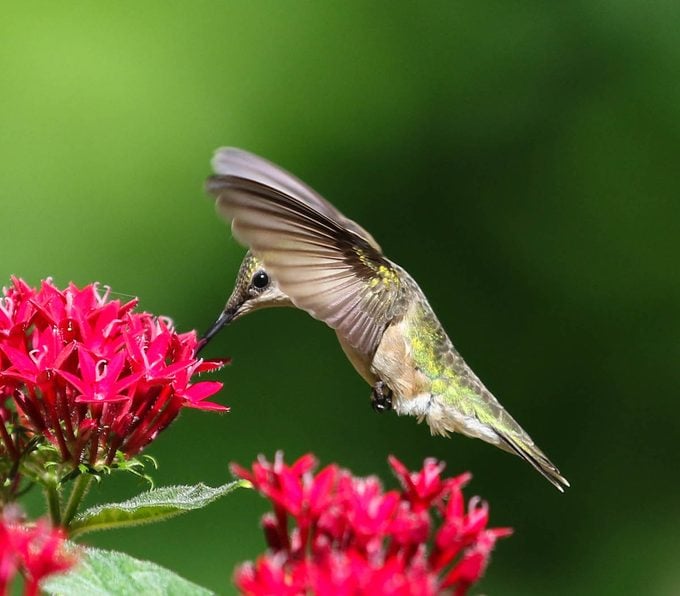
It starts on a typical morning with Karen walking into her garden to see if the hummingbird feeders need to be filled, when she sees a tiny hummingbird on the ground, belly-up. She's sure the little bird is dead, so she goes into the house for a tissue to wrap up the bird. As she picked up the colorful little bird, it moved. Karen said to the little bird, "You're alive! Would you like some water?"
She carefully wrapped the hummer in the tissue, making a tiny nest, and brought "her" inside. Karen was convinced the bird was a girl, as she was super tiny. Karen put a drop of water on her fingertip and gently put it onto her beak. The bird moved her tiny head to get some more water and Karen continued to give her drops of water. Soon the bird looked at Karen and started to move some in the tissue.
Karen placed the tissue with the bird on her counter and started talking to her in a calm, soothing voice and the little bird responded by moving back and forth. Then, Karen turned her head away from the bird, and suddenly she flew out of the tissue and toward the light of the window, but she fell to the floor. Karen told the little bird that she would take her outside and lo and behold, the bird let Karen pick her up in her hand. Karen said the tiny bird weighed less than a penny it was so light.
She brought the bird back to the garden and placed her on the "hummingbird bush" (the bush the other hummingbirds like to hang out on). Karen thought the little bird would fly away, but she stayed on the bush for several minutes, all the while Karen talked to her. Finally, she stretched her wings and flew away.
Can you imagine holding a hummingbird in the palm of your hand? Can you imagine dripping water on the hummingbird's long beak? For a bird that's smaller than a second and faster than light, Karen touched a hummingbird--and the hummingbird touched her too. What an amazing tale to tell.
When Karen told me this story she said that was the second time she had saved a hummingbird. That's so special.
Hummingbirds are native to the Americas. They are brave, long distance flyers, with an attitude...that's how they survive...and every so often a friendly human helps one out. That's the important part--helping out. Remember, we're all in this together.